
Finance Minister Nirmala Sitharaman on Thursday said the government is close to reaching saturation in implementing social sector schemes designed to provide basic necessities to the poor. Addressing the students of Hindu College on the occasion of its 125th anniversary, she said the time has come for India to become economically 'aatmanirbhar' (self-reliant) and march forward to becoming a developed nation by 2047. Regretting that 60 years since Independence passed without any sense of urgency, Sitharaman said, "We have laid the material foundation for a Viksit Bharat" and empowering people by providing basic necessities to all.
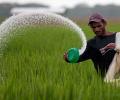
Domestic-focused agricultural chemical (agrochem) companies could face near-term headwinds, given the worries on the El Nio effect on monsoons, higher inventory, and pressure on margins. Some of these were reflected in the October-December quarter (third quarter, or Q3) results of companies and may impact them in the current quarter (fourth quarter, or Q4) as well. Nuvama Research pointed out that the sector witnessed mixed performance during the quarter as global agrochem and domestic fertiliser companies maintained growth momentum, while adverse agronomical conditions and excess channel inventory weighed on domestic market volume offtake.

India will make yet another effort at the ministerial level to give a push to Doha Round of WTO trade talks before leaders of the G-20 meet in Seoul next month.

The US on Tuesday said it was in favour of eliminating all trade distorting agricultural subsidies. However, it expressed disagreement with the Indian stand of protecting almost the entire agricultural market.

With Pawar backing farmers' protest against the contentious agri reforms, government sources on Sunday pointed out that as the agriculture minister in the UPA dispensation he had asked chief ministers to amend the APMC Act in their states to allow the private sector to play an important role in the field.

The price per kilogram of onion came down to Rs 2 to Rs 4, which angered the growers, who had stopped the auction at the APMC last week for a day.

Social stock exchange (SSE) saw its first listing on Wednesday, with SGBS Unnati Foundation becoming the first entity to take this route to avail financing. The foundation - engaged in vocational training of youth - raised Rs 1.8 crore from four investors. These include brokerage firm Zerodha and National Bank for Agriculture and Rural Development (Nabard).
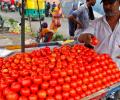
The Centre on Monday directed cooperatives NCCF and NAFED to sell tomatoes at a reduced rate of Rs 50 per kilogram from Tuesday in view of the decline in prices in the wholesale markets. Since July, both NCCF and NAFED have been selling tomatoes at a discounted rate on behalf of the consumer affairs ministry in Delhi-NCR, Uttar Pradesh, Rajasthan and Bihar to boost domestic availability and contain price rise. Initially, the ministry had asked the two cooperatives to sell tomatoes at a subsidised rate of Rs 90 per kg and later reduced the price to Rs 80 per kg. Further, the price was cut to Rs 70 per kg.

As more companies ask their employees to return to office after the pandemic, the share of women employed in regular salaried jobs in urban India decreased from 54 per cent in the first quarter to 52.8 per cent in the second quarter of the current financial year, according to the quarterly Periodic Labour Force Survey (PLFS) data. The slump in the share is the lowest in wage employment in any quarter in the last six years when the National Statistical Office started releasing the quarterly PLFS surveys in Q3 of FY19. The share of women in wage work was highest in Q1 of FY21 at 61.2 per cent.

With inflation topping the government agenda, economists have told Finance Minister Pranab Mukherjee to focus on policies to boost agricultural productivity in the upcoming Budget for 2011-12.

He presented the first-ever National Creators' Awards at the Bharat Mandapam in the national capital.
Excise duty hike for cigarettes could be lower.
Speaking at the 65th general council meeting of the National Cooperative Development Corporation, Pawar said the total availability of agricultural credit had doubled in the last three years.

'We will see a lot of investments from the private sector.' 'As long as we are not impacted by some global events, I think we will be in a strong place.'
Speaking to reporters on Tuesday, Commerce Secretary Gopal K Pillai said the agriculture text proposals on the special safeguard mechanism were not acceptable to India. A country can use the SSM to impose up to 50 per cent additional import duty on farm products which have seen a surge in imports.
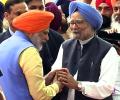
Whether it was the MGNREGS or the NFSA or the Aadhaar-based DBT scheme for cash transfer, the Modi government has built on the basic architecture created by the Singh government. Policy makers in the Modi government, instead of discarding them as products of the previous political regime, worked on them, expanded their scope and reach, and used new tools to improve their performance, explains A K Bhattacharya.

Consensus remained elusive on a common BRICS currency as business leaders from the five-bloc nations debated the pivotal issue at a business forum on the periphery of a summit of the five-member bloc being hosted here by South Africa. In their two addresses at the Summit so far, the leaders of Brazil, Russia, India, China and South Africa have made no or scant references to the issue either. "The BRICS Business Forum discussed the international payments system in detail. "Participants also debated the question of whether a BRICS currency is possible or desirable, with strong views expressed both for and against and little consensus reached," Sim Tshabalala, chief executive of Standard Bank Group, told several hundred captains of industry from the partner countries and over 40 other nations across the globe at the Summit.

In a statement, the department of consumer affairs said about 18,000 kg of tomatoes were sold across Delhi-NCR to retail consumers.

The government will amend the six-and-a-half-decade old Essential Commodities Act to deregulate food items, including cereals, edible oil, oilseeds, pulses, onion and potato, Finance Minister Nirmala Sitharaman said on Friday. The amendment, besides deregulating production and sale of food products, will provide for no stock limit to be imposed on any produce.
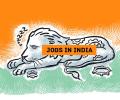
India's unemployment rate fell to a six-year low of 3.2 per cent in the July-June 2022-23 period, down from 4.1 per cent in the same period the previous year, according to the latest annual Periodic Labour Force Survey (PLFS) report. The report, released by the National Statistical Office (NSO) on Monday, showed a decline in unemployment rates in both rural and urban areas during the 2022-23 period to 2.4 per cent and 5.4 per cent, respectively, from 3.2 per cent and 6.3 per cent in the 2021-22 period. The unemployment rate for rural women (1.8 per cent) was lower than that for rural men (2.7 per cent) in 2022-23; in urban areas, the rate was higher for females (7.5 per cent) compared to males (4.7 per cent).

It is "absolutely clear" that the new laws will finish government mandis (wholesale markets) and private mandis where big corporates will sell and buy will have monopoly, he claimed.
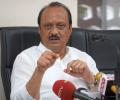
Nationalist Congress Party leader Ajit Pawar was given the finance and planning portfolio on Friday, nearly two weeks after he broke away from the original party and took oath as Maharashtra's deputy chief minister.

The petitions alleged that these laws would dismantle the Agricultural Produce Market Committee system intended to ensure fair prices for farm products

Even before NCP-Ajit Pawar leaders came to meet in Delhi, the central government decided to buy 200,000 tonnes of onions from farmers at Rs 24.1 per quintal. This was among the highest prices at which onions have ever been bought from farmers.

Most key rabi-producing states of north India, such as Madhya Pradesh and Rajasthan, have staggered their procurement to enable farmers to come in batches, so that there is no overcrowding. The Centre has also set up a call centre to coordinate the inter-state movement of farm commodities.

Elections are not won or lost by expounding on such macro-economic matters. For the aam admi, what matters in manifestos are promises that will improve their quality of life, notes Vinayak Chatterjee.

In a pre-budget meeting with Finance Minister Arun Jaitley, the experts suggested timely implementation of the BJP's election manifesto promises to fix higher support prices. They also favoured a Kissan TV channel, an efficient procurement policy, priority for farm mechanisation and the linking of rivers.

Having created businesses ranging from world's largest single-location oil refining complex to nation's largest mobile network operators in just few years, billionaire Mukesh Ambani says his group Reliance Industries Ltd will never be complacent and will grow to be among the top 10 business conglomerates of the world. Addressing employees on Reliance Family Day - the birthday of the group's founder Dhirubhai Ambani, he said Reliance is now aiming to consolidate a place among global leaders in digital data platforms and AI adoption. "Today, the domestic and global environments for business are changing very fast.

Tomato prices in the retail markets of the national capital declined to an average Rs 150 per kg on Monday from Rs 178 per kg on Sunday, according to the government data. However, e-commerce players such as Amazon, Big Basket and Otipy are selling tomatoes at Rs 170-190 per kg in Delhi-NCR. Blinkit is selling at Rs 138 per kg. The Centre is selling tomatoes at a subsidised rate of Rs 80 per kg in Delhi-NCR and some other cities through the National Cooperative Consumers' Federation of India (NCCF) and the National Agricultural Cooperative Marketing Federation of India (NAFED).

Union Agriculture and Farmer Welfare Minister Munda, Commerce and Industry Minister Piyush Goyal and Minister of State for Home Affairs Nityanand Rai represented the Centre at the meeting over the farmer unions' various demands, including a law guaranteeing a minimum support price (MSP) for crops. Punjab Chief Minister Bhagwant Mann also joined the meeting at the Mahatma Gandhi State Institute of Public Administration in Sector 26. The meeting started at around 8:45 pm on Thursday and lasted for around five hours.
Country's apex business chambers -- CII, Ficci and Assocham -- have said the WTO draft on Non-Agriculture Market Access under the Doha Round of trade talks was in complete disregard to the mandate of the round, which had to revolve around lesser obligation on the developing countries for duty reduction.
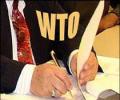
The statement has put paid to Australian Trade Minister Simon Crean's "controversial" ideas.
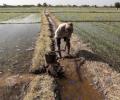
Bharat Krishak Samaj demanded that the Pradhan Mantri Fasal Bima Yojana should be replaced with a new crop insurance and compensation scheme.
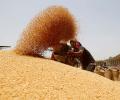
'All imaginary figures are pushed by government bureaucrats.' 'They never showed that the production of wheat was less this time.'

Assuming we still have a Modi-led majority government after May 2024, there is no guarantee that reforms will move at anything more than a snail's pace, though we must be thankful even for that, notes R Jagannathan.
India's core demands in the Doha agriculture package -- flexible treatment of special farm products and instruments to contain unforeseen imports -- have been properly reflected in the revised draft modalities text issued on Thursday.

'There are multiple ups and downs.' 'You should be able to withstand all that.' 'You need to have the temperament to run a marathon.'
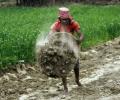
Kiran Vissa, co-convenor of National Alliance for Sustainable Agriculture, said that amendments to the EC Act have nothing to do with farmers' welfare but instead meant to please big players and agriculture companies. This is because small and marginal farmers don't have the storage capacity to attract provisions of the EC Act.
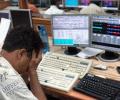
Among top losers, Reliance Industries (RIL) sank over 4 per cent, after the company shelved a proposed deal to sell a 20 per cent stake in its oil refinery and petrochemical business to Saudi Aramco for $15 billion. Other laggards included Bajaj Finance, Bajaj Finserv, NTPC, SBI and Titan.
On July 21, trade ministers from nearly 50 countries will converge at Geneva to finalise proposals on agriculture and non-agricultural market access (Nama) which are part of the Doha Round of world trade talks. World Trade Organisation Director General Pascal Lamy tells Business Standard why the ministerial is crucial.
